


What brings people in
Whether you are in perimenopause or past your last period, these are the concerns we see most often.
- Hot flushes and night sweats: day and night, at work and in bed
- Sleep: trouble getting to sleep, or waking at 3am and staying awake
- Mood: irritability, anxiety or low mood that feels out of character
- Brain fog and fatigue: losing words, losing focus, running out of energy
- Changing periods: heavier, closer together or unpredictable in perimenopause
- Skin and other changes: dry or irritated skin, aches and stiff joints
Periods giving you trouble earlier in life? See our Women’s Health page.
Why it feels different for everyone
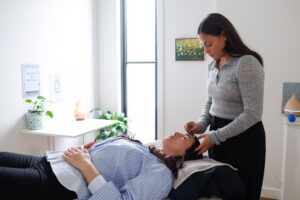
Menopause is a natural stage, but how it feels varies enormously.
Changing hormone levels interact with sleep, stress, diet and the rest of your health. That is why one woman sails through and another struggles for years.
We look at how your symptoms fit together, not just the loudest one, and treat the pattern behind them.
Alongside treatment, we give you practical advice on diet, sleep and stress, so you have things you can do every day.
What to expect
1. Discover
Your first visit is longer. We go through your symptoms, cycle and health history and work out what we think is driving them. You’ll have treatment in that first session, and you’ll leave with a plan.
2. Resolve
A clear course of treatment, typically weekly at first. Many symptoms change gradually, so we review how things are going over several weeks, and tell you straight if it isn’t working.
3. Whole again
Once things have settled, you choose. Some women come back every month or two to stay on top of it. Others just call when something changes.
What treatment involves
Your practitioner will choose from the following, depending on what you need. Most plans combine two or three.
- Acupuncture. Fine, single-use needles placed at specific points. Most people find it far gentler than they expected, and many fall asleep on the table.
- Chinese herbal medicine. A formula prescribed for you individually and adjusted as your symptoms change.
- Nutrition. Practical advice on eating well through this stage of life.
- Lifestyle advice. Sleep, stress and movement, so the work we do in the clinic carries on at home.
Alongside your GP or gynaecologist
Whether or not you’re on hormone therapy, we work alongside your GP or gynaecologist. We won’t ask you to stop anything your doctor has prescribed.
Bleeding after menopause, or very heavy or irregular bleeding in perimenopause, should be checked by your GP. If anything suggests you need a medical review, we’ll tell you.
Who you’ll see
Every practitioner at the clinic is AHPRA registered in acupuncture and Chinese herbal medicine.
Michelle McNeill
Trained in Melbourne with a hospital internship in Taipei. Builds movement, meals and daily habits into her treatment plans. Particular interest in women’s health, sleep and mental health.
Nick Conquest
Holds a Master of Traditional Chinese Medicine with a focus on chronic illness and women’s health.
Kerrie Dick
Compassionate and practical, with time for women whose symptoms haven’t been taken seriously elsewhere. Particular interest in menstrual irregularities and stress.
Adriana Dalic
A grounded, whole-body approach that looks for the root of the problem. Particular interest in skin health, stress and the nervous system.
Questions people ask
Can you help if I am on hormone therapy?
Yes. We work alongside menopausal hormone therapy and your GP’s care.
How do I know if it is perimenopause?
Changes to your cycle, sleep or mood in your 40s are common signs. Your GP can talk you through it, and we can help with the symptoms either way.
How soon will I notice a difference?
Everyone responds differently. We check in at every visit and give you our honest view of how things are going.
Does acupuncture hurt?
The needles are very fine, far thinner than the ones used for injections. You may feel a brief pinch, then a dull, heavy or warm sensation. Most people find it relaxing.
Can I claim on private health insurance?
Rebates may be available through private health funds with extras cover, depending on your policy. Check with your fund, and see our consultation fees.

Not ready to book yet?
Download our free guide, Easy steps to help manage menopause: practical diet and lifestyle steps you can start today.